
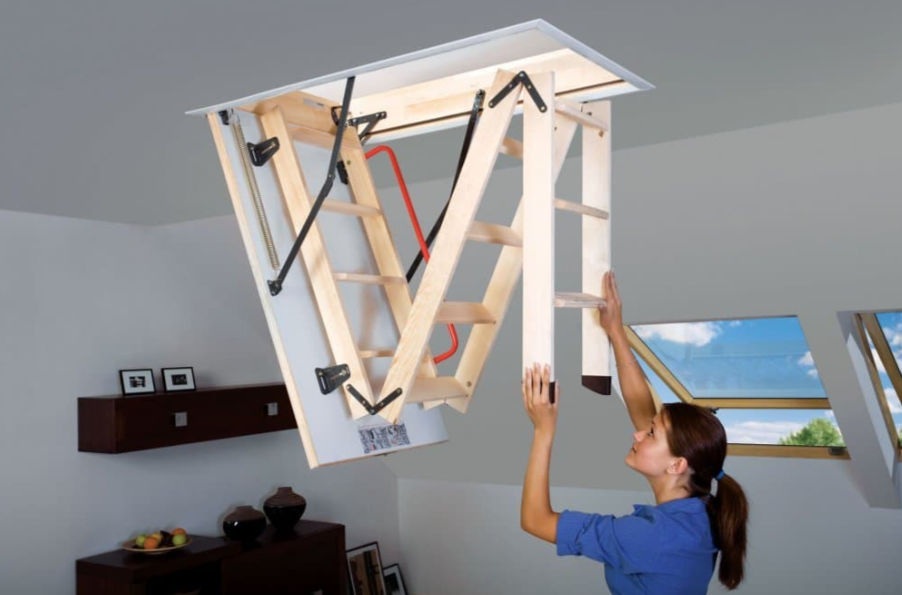
In modern residential design, safe access to elevated storage areas has become an important consideration for homeowners seeking both convenience and structural reliability. Poorly designed access systems can increase the risk of accidents, reduce energy efficiency, and shorten the lifespan of household fixtures. This is where loft ladders play a crucial role in ensuring secure, stable, and practical access to loft spaces while maintaining long-term durability and safety standards. As housing trends continue to emphasize compact storage optimization, the demand for high-quality ladder systems has significantly increased, making them a key feature in both new constructions and home renovation projects.
________________________________________
Top Trending Insights in Loft Access Systems
Recent developments in home improvement trends highlight a shift toward safer and more ergonomic access solutions. Homeowners are no longer focusing solely on storage capacity but also on how safely and frequently these spaces can be accessed.
Increasing preference for aluminum and reinforced timber designs due to improved strength-to-weight ratio
Growing demand for insulated hatch systems to improve thermal efficiency in homes
Rising adoption of folding and telescopic mechanisms for compact living spaces
Enhanced safety certifications becoming a standard requirement in modern housing markets
Integration of anti-slip steps and handrail support systems for reduced accident risk
These trends indicate a clear movement toward safety-first engineering combined with space-saving innovation.
________________________________________
Key Safety Statistics in Residential Access Systems
Studies in home safety management consistently show that improper access to elevated storage areas is a leading cause of minor household injuries. Industry observations suggest that nearly 35% of attic-related accidents occur due to unstable or poorly maintained access equipment. Additionally, homes that upgrade to reinforced ladder systems report a significant reduction in maintenance-related safety incidents over time.
Another important insight is that properly installed access systems can improve structural stability by distributing weight more evenly across support points. This reduces wear on ceiling frames and minimizes long-term repair costs. In energy-efficient housing, insulated loft entry points can also reduce heat loss by up to 25%, contributing to lower energy consumption and improved indoor comfort.
________________________________________
Why Safety Standards Matter in Loft Access Design
How do quality ladder systems improve household safety? The answer lies in material strength, design precision, and installation accuracy. High-grade materials such as treated wood or lightweight alloys ensure stability under repeated use, while precise engineering reduces the risk of wobbling or misalignment.
What role does durability play in long-term performance? Durable systems require less frequent replacement and maintenance, making them a cost-effective investment. Over time, this reliability helps prevent unexpected failures that could lead to injuries or property damage.
Why is professional installation recommended? Proper fitting ensures that weight loads are correctly distributed and that the ladder aligns securely with the loft opening. Incorrect installation, even with high-quality materials, can compromise safety and reduce usability.
________________________________________
Emerging Trends in Home Storage Accessibility
The evolution of modern housing design is heavily influenced by space optimization and user safety. Foldable ladder systems are becoming increasingly popular in urban homes where every square meter matters. At the same time, manufacturers are focusing on smoother operation mechanisms that reduce strain during use.
Smart home integration is also beginning to influence access systems, with some designs incorporating sensor-based lighting to improve visibility during night use. These innovations are not only improving convenience but also setting new benchmarks for residential safety standards.
Frequently Observed Safety Considerations
What maintenance is required for long-term use? Regular inspection of joints, hinges, and locking mechanisms ensures continued stability and reduces wear-related risks.
How often should safety checks be performed? Experts generally recommend inspecting access systems at least twice a year, particularly in homes with frequent loft usage.
What is the most important factor in choosing a system? Structural strength combined with ease of use remains the most critical consideration, ensuring both safety and practicality for everyday access.
In conclusion, investing in high-quality access systems is no longer optional but essential for modern homeowners. With growing awareness of safety standards, energy efficiency, and ergonomic design, well-engineered loft access solutions continue to play a vital role in improving both home functionality and long-term living comfort.